
|
Introducing the Opera 3 SQL SE Data Connector – coming soon to elevate your reporting and business intelligence needs! Take your data analysis to the next level with our new Data Connector, providing fast, secure, and direct access to your Opera 3 SE data. Seamlessly integrate with business tools like Microsoft Power BI, Excel, and SharePoint for deeper insights into your business operations. Data Connector: How Does It Work? Harnessing modern technology, the Data Connector utilizes flexible querying based on OData for efficient data access and extraction. It presents an intuitive dictionary with pre-defined links, making it extremely user-friendly. What Can It Be Used For? With simple and secure data extraction at your fingertips, analyze and report on all data within Opera 3 SE, including bespoke developments. Whether you're importing data directly into Excel, creating Power BI dashboards, or setting up critical business alerts, the Data Connector is your go-to solution. Plus, leverage Artificial Intelligence tools to address pressing business questions! Stay tuned for more updates and get ready to transform your data analytics experience with the Opera 3 SQL SE Data Connector!
This paper from Pegasus Software looks at how bringing online buying into the AP fold is driving seamless invoice processing, improved cashflow control and enhanced risk management. We are pleased to announce the release of Pegasus P11d Organiser 2024.2.1 for 23/24 and 24/25. Listed below are the main changes in the 2024.2.1 release of the Pegasus P11d Organiser. HMRC (HM Revenue & Customs) Compliance
Legislative changes In use for the 2023-24 tax year:
In readiness for the 2024/25 tax year:
Software Enhancements
 Missed out on our exclusive Pegasus XRL introductory training session? Don't worry, we've got you covered! We are thrilled to invite you to an exclusive webinar recording on the topic of Pegasus CIS 5 Subcontractors, where we delved into the intricacies of the UK HMRC Subcontractors scheme and its seamless integration into our software. Louise Dickenson, industry specialist and established Pegasus CIS product trainer, shared valuable insights and best practices during the webinar. Don't miss this opportunity to enhance your knowledge and understanding of CIS 5 Subcontractors, whether or not you are a current user. Comprehensive Subcontractor Control: Explore how our Subcontractors Ledger streamlines the regulatory requirements of HMRC's Construction Industry Scheme while efficiently managing subcontractors' details, including their Unique Taxpayer Reference and verification status. HMRC Construction Industry Scheme: Discover how Pegasus CIS 5 simplifies the verification process of subcontractors' tax status with HMRC, ensuring compliance and accuracy in payment processing. Applications, Invoices, and Timesheets: Learn how our system facilitates the processing of subcontractor applications, invoices, and timesheets while adhering to HMRC regulations, enabling smooth and error-free transactions. Domestic Reverse Charge VAT: Understand the implications of Reverse Charge VAT for construction services and how Pegasus CIS 5 ensures full compliance with these regulations. Payments: Explore our streamlined payment process, from selecting approved applications for payment to generating Payment Certificates, all while maintaining full compliance with the Construction Industry Scheme. Please find below the guides available for the following: Payroll Upgrade Checklist Guide Legislative & Software Changes Rates and Bands for NI, PAYE and Stat. Payments We are excited to announce that the Annual Payroll Seminar from o-a-sys is back for another year, bringing Pegasus Payroll directly to your desk. With year-end fast approaching our complimentary Pegasus End of Year Payroll Seminar is a great way to prepare your business for the months ahead. This seminar is designed to provide you with the latest HMRC legislative and technical changes that will be introduced into your payroll software. This year we had Bruce Kidd from o-a-sys to cover everything new regarding Opera 3 Payroll 2024 and run through the year end. We will also give an update on new utilities available for Pegasus Payroll. This is a recording of the 7th March 2024 webinar. Welcome to the recorded session unveiling the power and versatility of the Opera 3 Reporter module. Crafted with precision to enhance your reporting experience, this module empowers users to effortlessly generate customised reports, offering the flexibility to save and print at your convenience. Furthermore, it serves as a seamless export tool, facilitating data transfer to third-party products with ease. In this recording, we delve deep into the functionalities of the Reporter module, exploring essential topics such as creating reports for Excel, appending reports to the menu for all users, and more. Whether you're an experienced Opera 3 Reporter user, a newcomer, or someone intrigued by its potential, this session is tailored to enrich your understanding of these modules and unveil how they can revolutionize your reporting capabilities. Without further ado, let's embark on a journey to unlock the full potential of Opera 3 Reporter. It is my pleasure to extend a warm invitation to you for our complimentary webinar on "Opera 3 Hints & Tips" scheduled for November 30th at 10am. During this engaging session, we will delve into various modules, providing valuable insights and reminders for often overlooked features. These tips are geared towards optimizing your experience and streamlining operations for a more efficient workflow. In our pursuit of excellence, it is imperative to periodically revisit the fundamentals and unearth hidden gems that can greatly enhance our day-to-day operations. This webinar aims to do just that. Exciting news! On November 29th, we hosted a stellar launch for AP Automation to our esteemed Pegasus Opera 3 customers. The dynamic duo, yourself, and the incredible Steve Power from Pegasus, steered us through a journey of innovation and efficiency. Now, presenting the recording of this groundbreaking event, capturing insights, discussions, and the spirit of collaboration. Buckle up for a replay that's bound to redefine the future of our financial processes! Dive into the future of seamless Payroll & HR management with Opera 3! Here are some stellar facts: 1️⃣ Unlimited Scalability: Manage multiple companies and employees effortlessly – it's the standard, because why settle for less? 2️⃣ HMRC Harmony: Stay worry-free with full HMRC compliance. Your payroll is in safe hands. 3️⃣ Tech Integration Magic: Develop a symphony of efficiency by linking Time & Attendance systems seamlessly. 4️⃣ P11D Made Easy: Navigate the complex world of P11D effortlessly with our dedicated software. 5️⃣ Pensions Perfection: Add a touch of finesse with NEST and NOW pensions integration – because your employees' futures matter. 6️⃣ Tax Code Tango: Stay in rhythm with HMRC. Link up for swift tax code changes. 7️⃣ Statutory Payment Simplified: Effortlessly handle statutory payments like a maestro, making compliance a breeze. Ready for a revolution in your Payroll processes? Stay tuned for our upcoming datasheet release – unlocking a world of possibilities! #Opera3 #Pegasus #PayrollHR We are delighted to present to you a valuable resource for financial management and business optimisation. Join us as we dive into the world of Fixed Assets with our Sales & Marketing Director, Bruce, who hosted a live webinar on Opera 3 Fixed Assets. This exclusive session, held on October 26, 2023, is now available for your viewing pleasure. In this recording, Bruce shares his insights and expertise, offering a unique perspective that reflects his wealth of knowledge and experience. Whether you're an aspiring entrepreneur, seasoned professional, or simply curious about the intricacies of financial management, this webinar provides valuable insights that are sure to enrich your understanding. We invite you to explore this recording and gain a deeper insight into the world of Opera 3 Fixed Assets. I am delighted to extend a warm invitation to the recording of our previous webinar on the topic of "Opera 3 Importing" that took place on September 28th at 10 AM. This session promised an in-depth exploration of the Opera 3 Import wizard, uncovering its diverse applications, functionalities, and an array of indispensable tools for seamless data importation. Regardless of whether you are well-versed in the intricacies of Opera 3 or are embarking on a journey of discovery, this webinar is tailored to enrich your grasp and proficiency. Our presenter will furnish you with practical insights and strategies to refine your importing procedures, affording you the luxury of both time and efficiency. Key Highlights of the Webinar:
These monthly webinars are a complimentary offering from o-a-sys, open to all Opera 3 users. It presents an invaluable chance to elevate your Opera 3 experience. Register for future monthly webinars in the Customer Zone of our website. See our exciting new Accounts Payable (AP) application for Opera 3 SQL SE in action by watching our demo video below. Introducing AP Automation for Pegasus Opera 3 SQL SE: Revolutionizing Your Accounts Payable in 2023!1/9/2023
In the ever-evolving landscape of business operations, staying on top of your invoices is paramount. Accounts payable departments have long grappled with the challenges of managing a mountain of invoices, risking late payments, and even fraudulent activities. But fret not, for the future of financial management is here – AP Automation for Pegasus Opera 3 SQL SE! Why is AP Automation an absolute must-have in 2023? Let's dive into the reasons:
Don't miss the opportunity to revolutionize your accounts payable processes. The Pegasus Opera 3 SQL SE AP Automation is your gateway to efficiency, visibility, and security in 2023 and beyond. Join us in this exciting journey towards financial excellence! Mark your calendars for an exceptional event as o-a-sys cordially invites you to an upcoming milestone – the recording of our highly anticipated monthly webinar. On Thursday, August 31, 2023, we're thrilled to bring you an in-depth exploration of the remarkable capabilities within Opera 3 Stock Control and Opera 3 Bill of Materials. This webinar promised a profound revelation into the potential that Opera 3 holds in revolutionising your stock management. Prepare to embark on a journey where seamless stock control operations and unprecedented insights into supply chain management will unfold before you. Our experts will deftly guide you through the intricacies of the Opera 3 Bill of Materials module, presenting an invaluable opportunity to refine production processes, manage assemblies with precision, oversee components, and establish meticulous costings. This is your chance to seize a transformative understanding of Opera 3 and unearth its unparalleled advantages for your organization. Should you wish to tailor these sessions to your queries or specific interests, we welcome you to reach out to us at [email protected]. We're committed to ensuring your questions find their answers amidst the insightful discourse. Operational Accounting Systems Limited trading as o-a-sys partners with Pegasus Software as their AP automation partner.
Ashford, Kent, UK: o-a-sys today announced an ongoing partnership with Pegasus Software. This new partnership will give o-a-sys’s customers access to best-in-class supplier invoice automation. “We are very excited to carry on with our Pegasus partnership, says Bruce Kidd, Sales & Marketing Director at o-a-sys. “AP Automation will save time, money and eliminate needless errors in processing Purchase Invoices.” “I am proud to witness the transformational power of AP Automation within Pegasus. With streamlined processes and cutting-edge technology, we are soaring to new heights of efficiency and accuracy. Embracing AP Automation has not only elevated our financial operations but has also unlocked the potential of our talented team, allowing them to focus on strategic initiatives and driving innovation. Together, we're riding the winds of progress, propelling Pegasus Software towards a future of unparalleled success.” says Julian Cassell, Business Development Manager at Pegasus Software. “ What will be achieved? Invoice capture and Accounts Payable Automation for Opera 3 SQL SE provides the simplest way of capturing and processing invoices and gives AP teams complete visibility to process invoices quickly and make smart budgeting decisions. About o-a-sys: (o-a-sys) is renowned for is setting up, developing and supporting specialist software solutions for small to medium sized businesses in the UK with a focus on Payroll, Pensions, Accounting, Reverse VAT, ECVAT, MTD, Inventory Optimisation, Business Intelligence, Construction Industry Solutions and Integrated Systems. we take great pride in the way that we take care of our customers, whether it is through our dedicated support, specialist development, informative marketing or exclusive events. We are a business that truly puts the customer first with an underlining ethos of integrity and honesty that has seen us through many years of trading and resulted in a number of accolades and loyal customers. About Pegasus Software: Pegasus is an award-winning provider of accounting, payroll and business software, with 40 years’ experience. The aim is simple: to build the finest business tools that will enable tens of thousands of companies like yours to run their operations every day effortlessly and profitably. Welcome to the recording for the Opera 3 Reporter module! This module has been thoughtfully crafted to empower users like you in generating quick and easy reports. It not only allows you to save these reports for printing at any time but also serves as an expert tool to seamlessly transfer data to third-party products. If you've been curious about the module's functionalities and want to harness its full potential, we have an exciting opportunity for you to watch the recording of the Reporter webinar from Thursday, July 27th, 2023, at 10 am. In this webinar we explored how to create reports that can be seamlessly run to Excel or appended to the menu for all users. It's a must-attend event for all Opera 3 Reporter users, whether you're already using it, a new user, or considering its implementation. Best of all, these webinars are completely FREE, so don't miss this chance to enhance your expertise within Opera 3 on the last Thursday of every month! See a full schedule in the Customer Zone. This paper highlights five steps in making a move to greater automation in accounts payable (AP) and looks at the key things to consider when establishing a business case. Supply Chain Management (SCM) at it’s most fundamental level, is managing the flow of goods, data, and finances related to a product or service, from the procurement of raw materials to the delivery of the product at its final destination. Sales & Purchase order Processing are part of the Supply Chain Management applications in Opera 3. Sales Order Processing allows the management of your documents for the sales process and Purchase Order Processing help in the production of documents in your purchasing cycle. To help users better understand these modules, we had the Supply Chain Management webinar on Thursday 29th June 2023 at 10am. This is a FREE webinar and open to any Opera 3 Supply Chain users, new users and potential users. These webinars continue on the last Thursday of every month. Head on over to the customer zone to book for future webinars. The annual P11D filing date is now getting closer on the 6th July 2023. The Pegasus P11D software has been released. 
This session has been designed to introduce you to and to give you a brief overview of what the Sales Pipeline management application is all about. SPM is a contact management tool which allows you to effectively handle relationships with your existing customers, suppliers, but more importantly, your prospects. By prospects I mean those companies that you haven't yet sold to, however, you still need somewhere central to store all communication and to track correspondence with your prospects to make sure that you do not lose sight of any opportunities in order to help you drive forward your sales. This recording is taken from a FREE webinar open to any Opera 3 Sales Ledger users, new users and potential users. For a full schedule of events visit our Customer Zone. This whitepaper looks at the role of BI in helping to mitigate risk, minimise costs and support greater visibility amidst a new inflationary environment for business. As 2023 speeds along, we continued with the monthly o-a-sys Webinars to look at specific areas in Opera 3. In this webinar we investigated the Nominal Ledger Maintenance and Utilities areas, discover Processing and Reporting. We also discovered Open Period Accounting and how the Credit Management Center can add value to your Opera 3 system. This recording is taken from a FREE webinar open to any Opera 3 Sales Ledger users, new users and potential users. For a full schedule of events visit our Customer Zone. You may have read in the latest Employer’s Bulletin that HMRC has announced that from 6th April 2023, it will no longer accept paper P11D and P11D(b) forms. An extract of the article is below: From 6 April 2023 all P11D and P11D(b) must be reported online For the 2022 to 2023 reporting year we will no longer accept paper P11D and P11D(b) forms, this includes lists. We recommend you file using one of the following methods:
From 6 April 2023 we will no longer accept any paper amendments. Instead, we will launch a new online submission link to submit your amended P11D and P11D(b). More information on how to use this will be available in the April edition of the Employer Bulletin. The P11D Organiser and Electronic Submissions A majority of our payroll customers already take advantage of the P11D Organiser’s ability to submit P11D information to HMRC using the in-built tools of the software – the P11D Organiser has a Government Gateway client integrated into the standard software that will securely send P11D and P11D(b) information to HMRC at the click of a button. P11D and P11D(b) Amendments HMRC has now told us that they will “publish and mandate an electronic version of the P11D and P11D(b) form accessible via GOV.UK, which will enable employers to submit amended forms electronically from 06 April 2023. Employers will be able to access a new electronic form within GOV.UK to submit any amended P11D and P11D(b) forms. The electronic form is not linked into the online submission route via either 3rd party or HMRC software, so no changes are required to facilitate its use. Summary HMRC removing the ability to submit paper P11D and P11D(b) forms is a good thing – anytime manual intervention is required to process data there is a chance of errors creeping in, but printed documentation also opens a security hole related to personal information. This change, in line with many of the Making Tax Digital initiatives, will speed up processes, enhance accuracy, and improve security, which are all beneficial to employees and employers. The P11D Organiser is perfectly positioned to ensure that data you have entered is sent to HMRC in the fastest and most secure method available. The P11D Organiser software seamlessly link to your Opera 3, Opera 3 SQL and Opera 3 SQL SE Payroll & HR software. If you want to discuss any of these points with o-a-sys, please drop us an email to [email protected], or give us a call on 01233 812050. Also contact Bruce to discuss pricing and threshold on email to [email protected]. |
Categories
All
Archives
July 2024
|
||||
 RSS Feed
Find us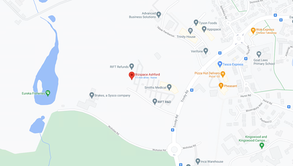
o-a-sys is a trading name for Operational Accounting Systems Limited. Registered in England and Wales Company 05216590
|
Contact us46 The Cobalt Building, 1600 Eureka Park, Lower Pemberton, Ashford, TN25 4BF
01233 812050
[email protected] |
© COPYRIGHT 2021. ALL RIGHTS RESERVED.
|